2025: Key Decisions and Milestones – The Bałtyk Projects in Focus
The year 2025 will go down in history as a breakthrough period for offshore wind energy in Poland. Equinor and Polenergia’s Bałtyk 2 and Bałtyk 3 projects entered the construction phase, while Bałtyk 1 was prepared for the auction. It was a year of key permits and contracts, investment decisions, financial close, and the commencement of construction works. It was the year when the projects moved from the planning to implementation, and the first elements of infrastructure began to shape the future energy landscape of the Baltic Sea.
A milestone for the Bałtyk 2 and Bałtyk 3 projects was the achievement of financial close under a project finance structure – the largest transaction of its kind in the history of the Polish power sector. This, together with a Final Investment Decisions (FID), confirmed the projects’ readiness to enter full-scale construction.
Visible progress on construction works
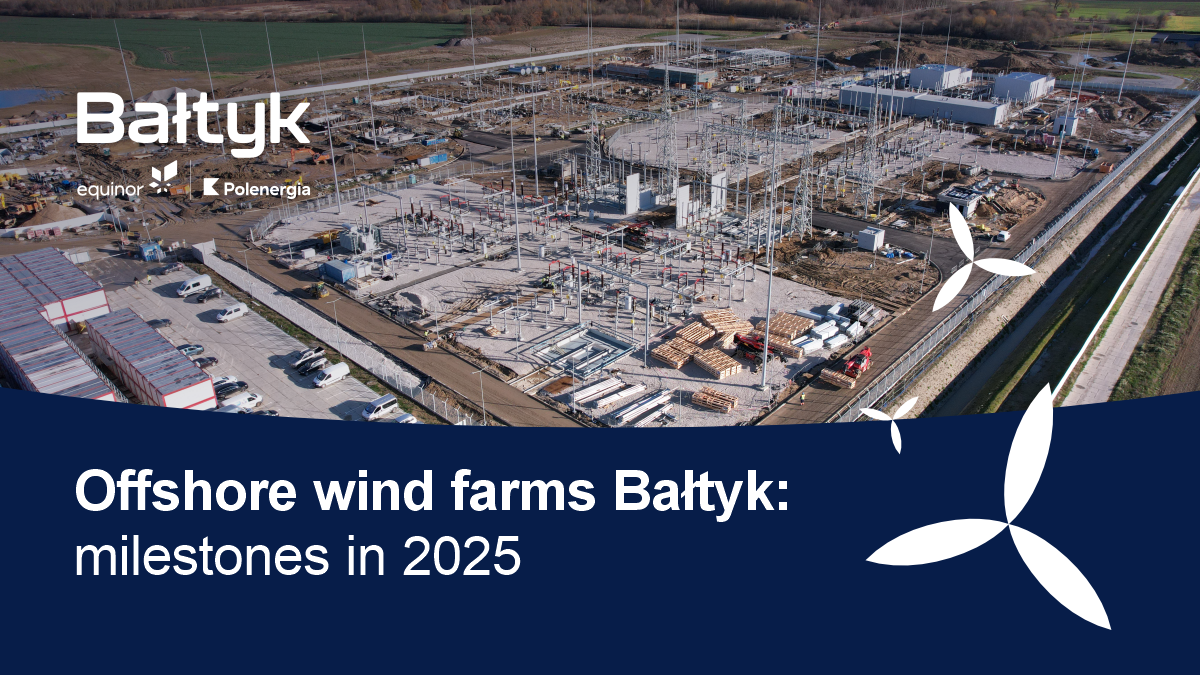
Spring marked an intensive period of work carried out simultaneously onshore, in the landfall area, and offshore, including preparatory activities and surveys. Onshore, construction of two onshore substations in Pęplino continued, reaching a high level of progress in both structural and installation works. In the landfall area, approximately three kilometers west of the port of Ustka, the first pilot HDD drillings were completed, preparing the cable exit point to the shore.
Works on the approximately 14-kilometre onshore cable route connecting the landfall with the substations for the Bałtyk 2 and Bałtyk 3 projects, and further to the Polish Transmission System Operator (PSE) substation Słupsk–Wierzbięcino, reached around 70% completion. Offshore cable routes underwent UXO (unexploded ordnance) surveys and preparatory works, including boulder relocation. Importantly, in line with good industry practice, environmental monitoring of the offshore wind farm areas commenced in June, ahead of construction. The monitoring covered marine mammals, birds, and benthic organisms. Intensive offshore analyses, surveys, and seabed works carried out this year involved 18 vessels, preparing the sites for the next stages of construction.
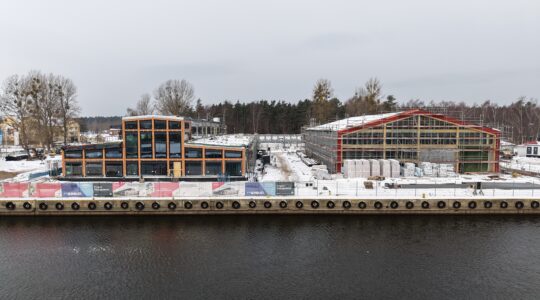
Łeba became a key location on the investment map. In March, the cornerstone ceremony officially marked the start of construction, while the topping-out ceremony in November symbolically concluded the structural phase. Initial outfitting works have already begun, together with recruitment for technical and office positions, laying the foundations for the future operations team. The Łeba base will serve as the operations and maintenance hub for the Bałtyk wind farms. The construction of the operations and maintainance base was recognized by the Regional Labour Inspectorate in Gdańsk as the safest construction site in the Pomeranian Voivodeship.
Bałtyk 1 project milestones
Key developments in 2025 also involved the Bałtyk 1 offshore wind farm project. The investment obtained a final environmental decision, following extensive surveys and analyses that formed the basis of the Environmental Impact Assessment (EIA) report. In June, Bałtyk 1 became the first project to submit a prequalification application to the Energy Regulatory Office, confirming its readiness to participate in Poland’s first offshore wind auction, on December 17, 2025.
Supply chain development and local content growth
As the Bałtyk 2 and 3 projects progressed, cooperation with partners responsible for the delivery of services and key components gained increasing importance. Equinor and Polenergia consistently strengthened the supply chain by signing contracts covering, among others, the construction of the service base, seabed surveys, and the clearance of subsea cable routes including boulder removal. A crucial element of project progress was the fabrication of infrastructure components – both structural and electrical. Certain elements, such as cables for the onshore section, are being systematically delivered to the site, while others remain in production awaiting transport. Manufacturing and transport of transition pieces (TPs) are underway, along with fabrication of topsides, the main components of offshore substations, assembly of jacket foundations, and installation of substation equipment.
For investors, the development of local content remains a key priority, both during the supply phase and future operations. In Poland, Smulders facilities in Żory, Łęknica and Niemodlin manufactured secondary steel for TPs, topsides and other components. Hitachi Energy in Łódź produced autotransformers, and Tele-Fonika Kable’s plant in Bydgoszcz supplied cables for the onshore section.
Equinor and Polenergia organize Supplier Day events to support the development of the local supply chain. In April, an edition was held for service providers involved in the construction and operations phases of Bałtyk 2 and 3. In September, the companies met for the first time with firms interested in joining the supply chain for the Bałtyk 1 project. In total, nearly 230 companies took part in these events.
Engagement with Pomeranian communities
Alongside investment activities, Equinor and Polenergia consistently maintained open and transparent dialogue with local communities, as a vital element of successful project delivery. Company representatives actively participated in municipal events, meeting residents and visitors in Łeba, Pęplino, and Swołowo to discuss the role and benefits of offshore wind farms. Regular information meetings were held throughout the year, during which plans for the upcoming stages were presented, progress updates shared, and residents’ feedback collected - reinforcing a partnership-based approach to project implementation.
In addition, a permanent information point in Łeba enables residents to maintain ongoing contact and access detailed information about the projects.
Cooperation involved providing financial support for local initiatives, including refurbishment and modernization of activity centers in Łeba and Bruskowo Małe, to substantiate good neighborly relations and engagement in regional development. Similar initiatives, also supported by the Bałtyk projects, will be implemented next year in the Municipality of Ustka. Moreover, in cooperation with the Słowiński National Park, the companies supported a fish re-stocking programme for Łebsko and Gardno Lakes, strengthening the biodiversity of these protected water bodies.
Dialogue with the fishing community
In 2025, in response to the needs and challenges associated with project delivery, the investors organized 12 information and consultation meetings with the fishing community. The dialogue led to the development and implementation of an transitional compensation scheme. This system will apply during the construction of the offshore wind farms, or until national regulations introduce, uniform compensation principles for all offshore wind investors operating in the Baltic Sea.
Educational activities
The year 2025 also saw the implementation of educational initiatives, which the companies regard as an essential component of their projects. In December, an educational workbook on offshore wind energy was published for primary school teachers and students.
Interest continues to grow in the exhibition The Baltic Sea – A Sea of Green Energy, located at the Maritime Culture Centre, a branch of the National Maritime Museum in Gdańsk. This first exhibition in Poland dedicated to offshore wind energy opened in June 2024 and has since been visited by nearly 45,000 people, including Crown Prince Haakon of Norway during his official visit to Poland.
It was an exceptionally intensive year, which paved the way for further activities in 2026. Equinor and Polenergia extend gratitude to partners, local communities, and all institutions supporting the development of the Bałtyk projects for their cooperation and commitment.
Podobne wpisy
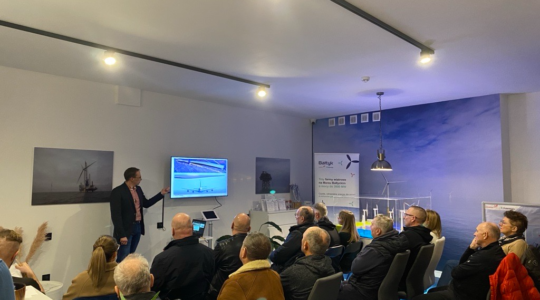
Equinor and Polenergia will continue their dialogue with local residents and invite them to get in touch.
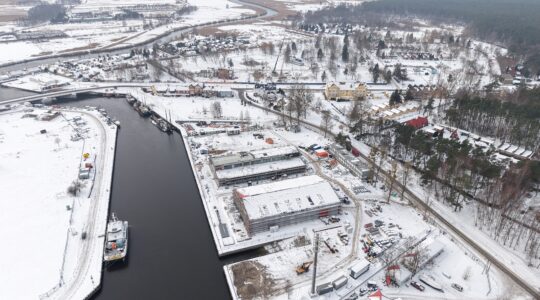
Progress in the construction of the operational and service base in Łeba