Equinor and Polenergia, the developers of the Bałtyk 2 and Bałtyk 3 offshore wind projects, are launching the offshore installation campaign. This is one of the largest and most complex infrastructure projects currently underway in the Baltic Sea, marking a new chapter in the development of Poland’s offshore energy sector.
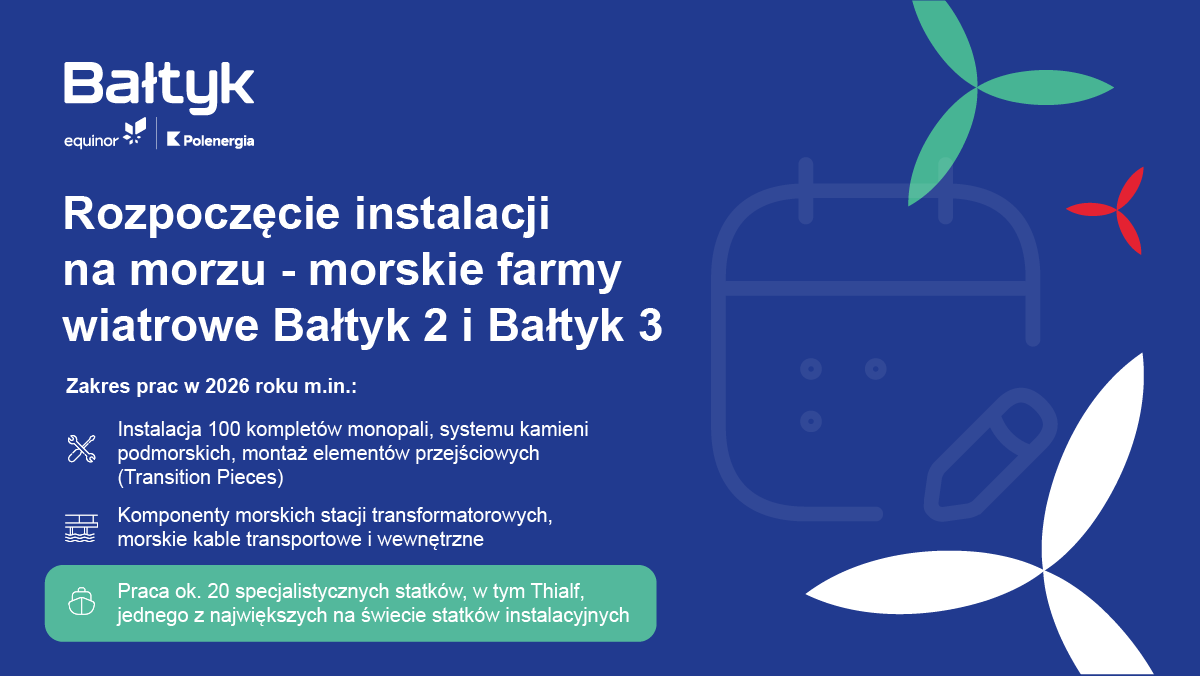
The scope for 2026 includes the installation of 100 monopiles, transition pieces, offshore substations components, subsea cables and supporting infrastructure. In 2026 alone, more than 20 vessels will be engaged in the construction work, including one of the world’s largest installation vessels, Thialf, alongside a fleet of highly specialised units.
Preparations for offshore works
The start of the installation campaign follows years of offshore preparations. Comprehensive seabed assessments, UXO investigations, environmental studies and geophysical and geotechnical surveys were undertaken to secure a complete understanding of the site conditions and enable safe and efficient execution.
Subsea Rock Installation
In January, the first phase of the offshore campaign officially began with the rock laying. This is a key part of seabed preparation, essential to ensuring the safety, durability and long-term stability of all infrastructure to be installed across both wind farms.
Specialised vessels are placing layers of carefully selected rock across designated seabed areas. The rock layer provides erosion protection for the monopile foundations – preventing seabed scouring caused by waves and currents – and ensures the protection and stabilisation of both export and inter-array cables after installation, particularly along sections exposed to stronger currents or vessel activity.
The works are carried out by the Van Oord company, which will deploy four dedicated vessels capable of placing material with high precision even at significant water depths. The vessels use a Dynamic Positioning (DP) system that keeps them in position and enables rock placement with accuracy up to significant sea state and wind conditions.
In total, more than one million tones of rock, equivalent to approximately 400,000 cubic meterrs of material, will be placed on the seabed. The material is selected for its strength, durability and environmental safety.
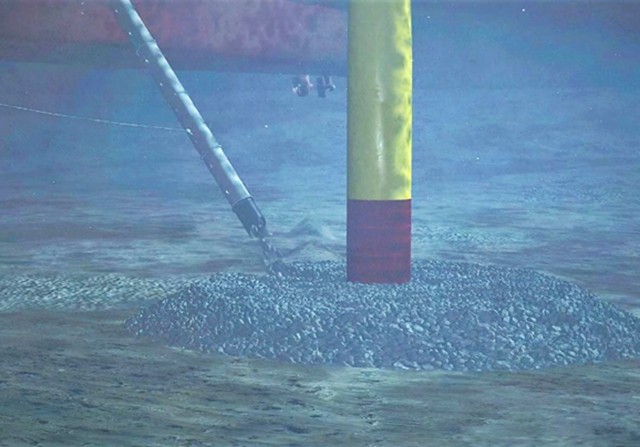 Źródło/Source: Van Oord
Next steps in the offshore campaign
Next – in spring 2026 – the campaign will move to the transport and installation of monopiles, transition pieces and selected components of the two offshore substations. One of the largest heavy lift installation vessels in the world – Thialf – will arrive in the Baltic Sea, with a continuous stream of support vessels delivering components for installation. Thialf is a proven unit, extensively used in offshore projects worldwide.
In the following months, work will continue with the installation of export and inter-array cables.
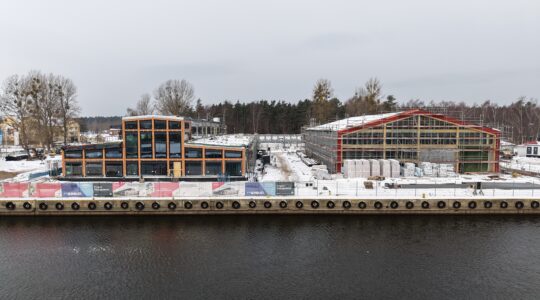
Construction of Equinor’s Operations and Maintenance Base in Łeba will also be completed and commissioned. During construction, the facility will serve as the coordination center for vessel traffic and offshore operations for the Bałtyk 2 and Bałtyk 3 projects.
In 2027, the installation of wind turbines will continue, together with the outfitting of the offshore substations, and the first power is expected to be delivered to the Polish power system
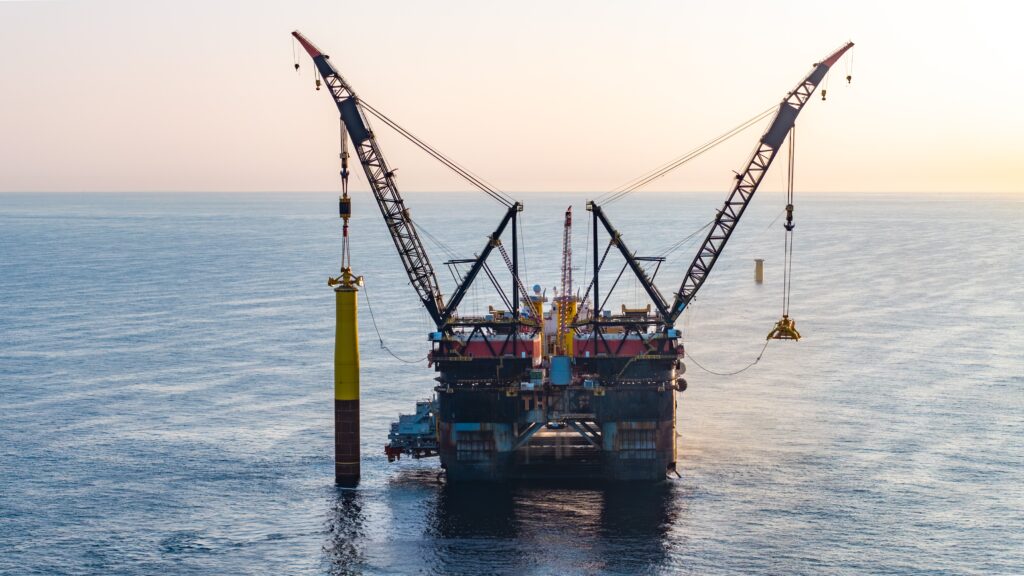 Źródło/Source: Equinor
Podobne wpisy
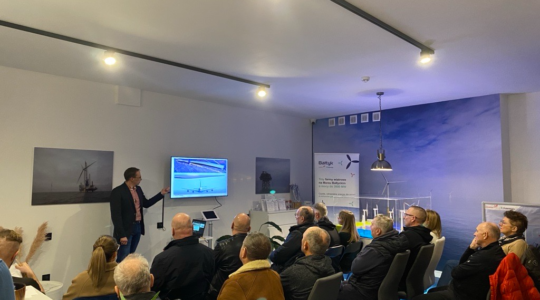
Equinor and Polenergia will continue their dialogue with local residents and invite them to get in touch.
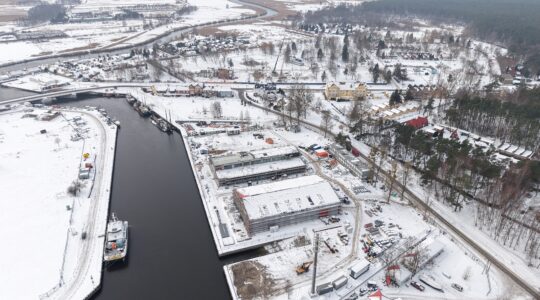
Progress in the construction of the operational and service base in Łeba