Kick-off of offshore installation: the first foundations installed at Bałtyk 2 & 3
Offshore construction has reached a new milestone as Equinor and Polenergia have successfully installed the first offshore wind foundations for the Bałtyk 2 and Bałtyk 3 projects in the Baltic Sea. The first dozen sets of monopiles and transition pieces have already been safely installed in the Baltic Sea, marking the start of the offshore installation campaign for the projects.
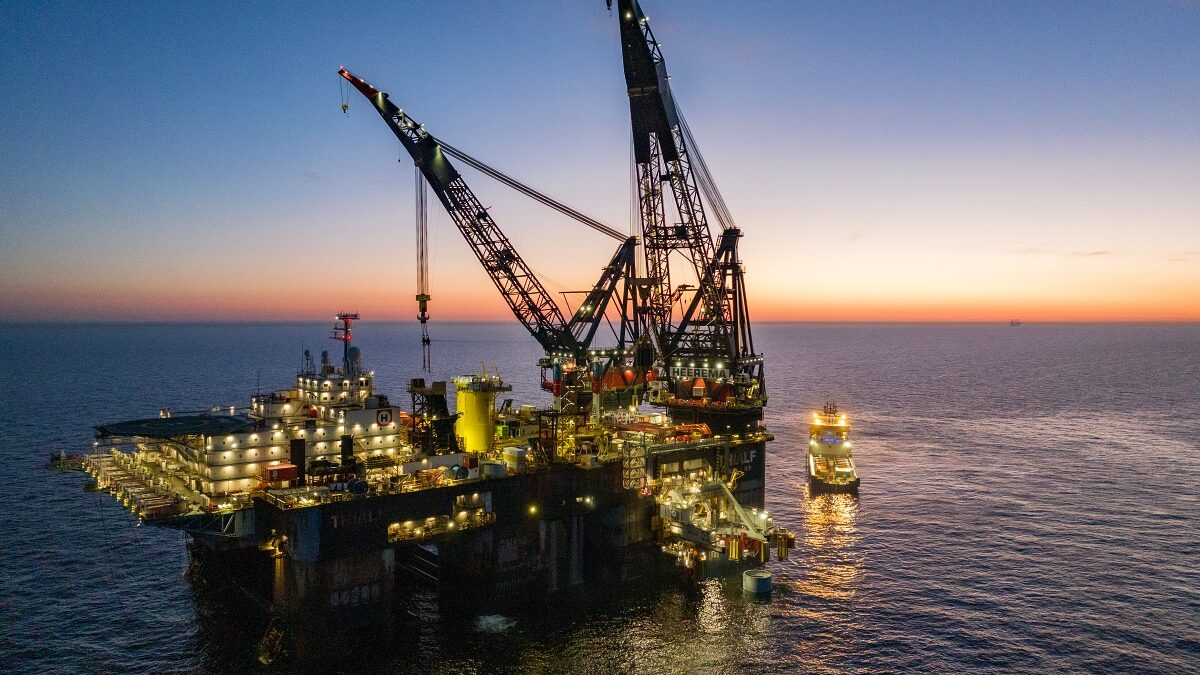
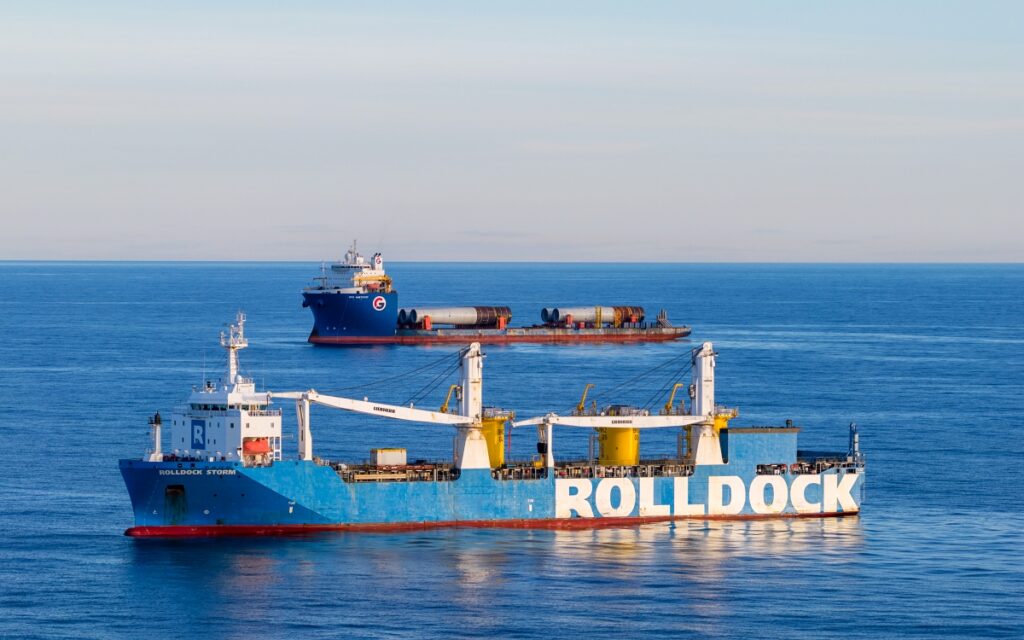
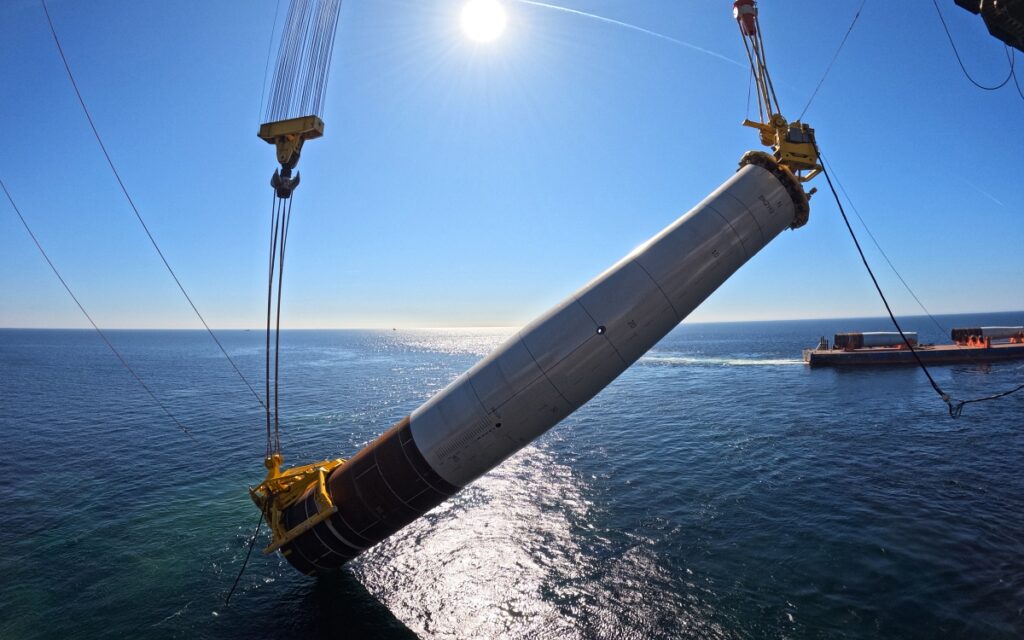
One of the world’s largest heavy-lift vessel, Thialf, operated by Heerema Marine Contractors, is carrying out the installation work. The massive vessel over 200 meters in length and 88 meters in width, lifts monopiles from a transport vessel positioned alongside. Each steel monopile, approximately 50–70 metres long, is raised from a horizontal to a vertical position and lowered into the seabed using a specialised gripper frame that ensures precision and stability during installation.
Once securely installed in the ground, highly precise transition pieces, approximately 17 meters tall, are mounted on top of the monopiles. Together, they form the foundation for the offshore wind turbines, which are scheduled to be installed in 2027. With their signature yellow colour above the waterline, these structures serve as the first permanent constructions at the Bałtyk 2 & 3 sites in the Baltic Sea.
In total, 100 foundation sets will be installed as part of the offshore construction phase, and later this year the offshore substation jackets will be installed.
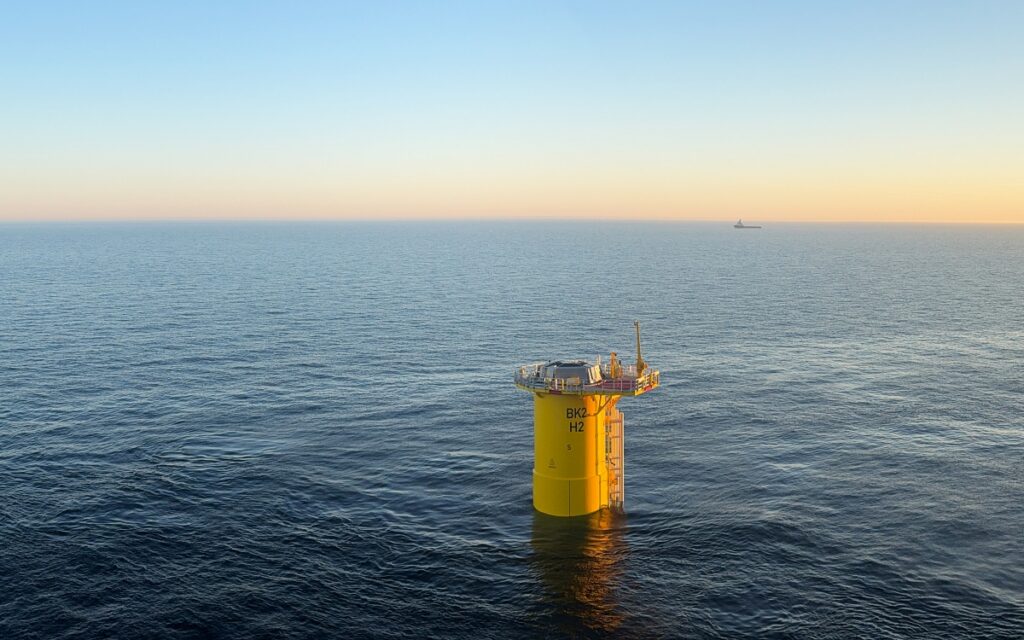
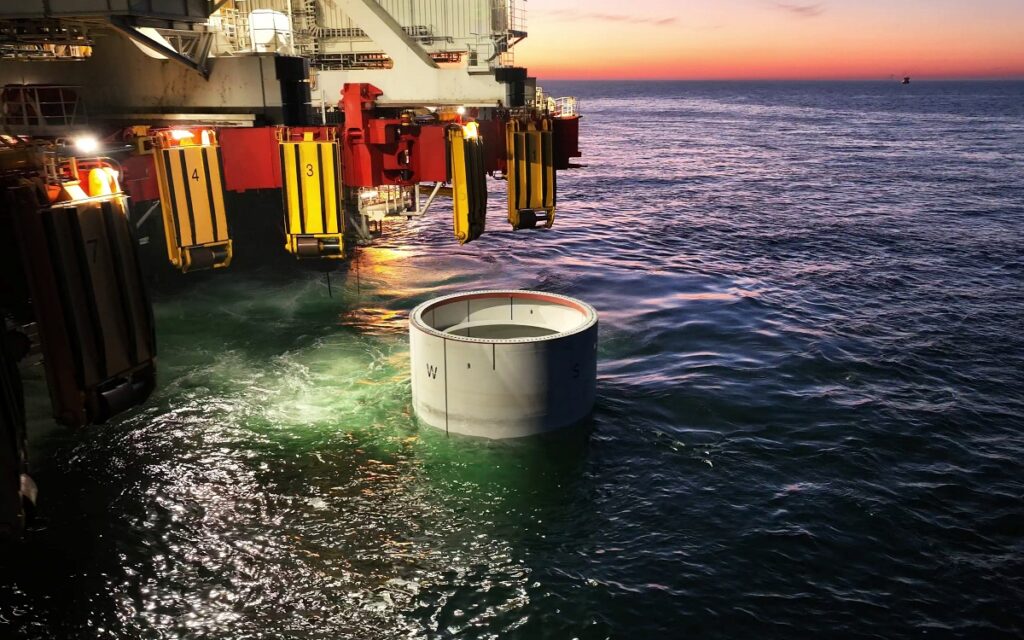 Zdjęcia/Photos: Thomas Sola/ Equinor
The offshore installation campaign is a highly precise endeavour, requiring careful coordination of marine operations, weather windows and vessel sequencing. At its current stage, the campaign involves more than dozen vessels operating simultaneously, including support vessels providing transport, installation, logistics and marine support services, all working under strict safety and quality requirements. The campaign is supported by ports in Poland and other European countries, while the operations and maintenance (O&M) base in Łeba plays a key role as a support hub for offshore construction activities and as a marine coordination centre.
It is worth noting that high environmental standards are maintained throughout the works. Prior to installation, monitoring of marine mammals is carried out, including acoustic monitoring using specialized detectors. If their presence is not detected, installation begins with a soft-start procedure, allowing marine mammals to move away from the work site. In addition, a bubble curtain is deployed around each foundation during installation to reduce underwater noise.
– We have successfully launched the offshore installation for Bałtyk 2 and 3. This is a complex and demanding phase, based on close collaboration and precise coordination across multiple teams and units. The initial works are progressing as planned, maintaining high standards of safety and quality,” said Michał Jerzy Kołodziejczyk, Country Manager Poland, Equinor.
– Poland’s energy security is increasingly being built around the Baltic Sea. Offshore wind energy is entering a phase of tangible progress, and Bałtyk 2 & 3 projects are beginning to take shape as infrastructure of strategic importance. This is an important step not only for the investments themselves, but also for the development of domestic expertise, a modern economy, and the growing role of Polish companies in the offshore sector – commented Adam Purwin, CEO of Polenergia.
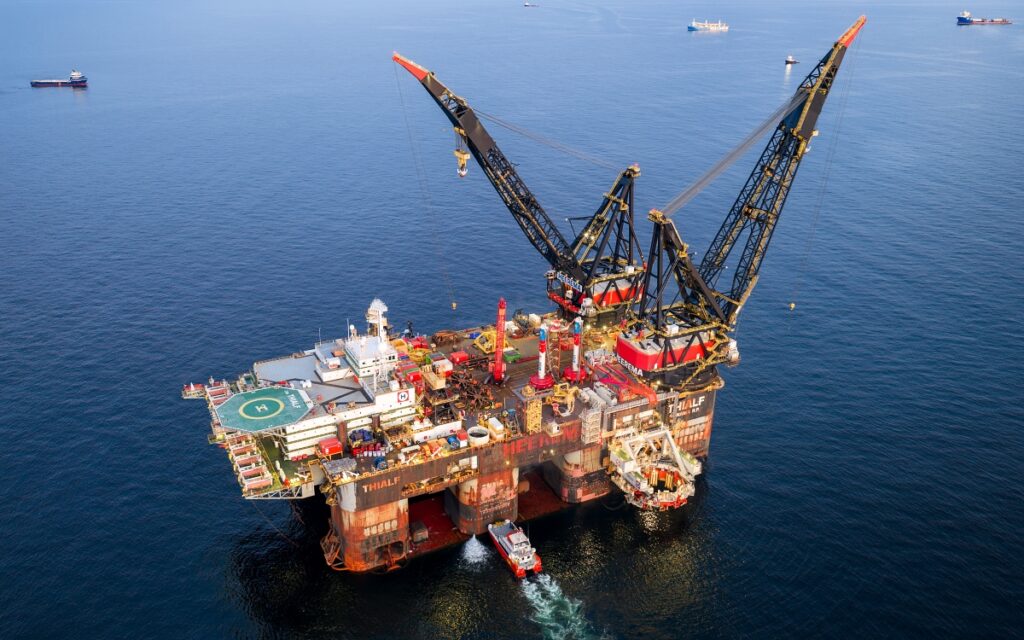
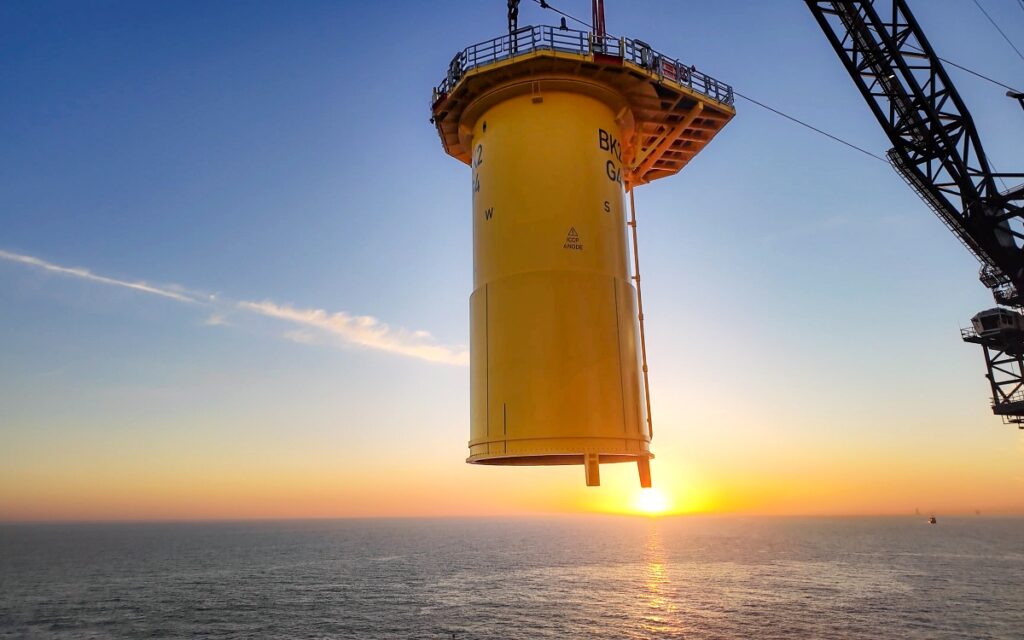 Zdjęcia/Photos: Thomas Sola/ Equinor
Once fully operational, the Baltyk 2 & 3 projects will have the combined capacity of 1 440 MW, capable of supplying energy to two million homes, strengthening Poland’s domestic energy supply.
The Baltyk 2 & 3 is expected to deliver its first power in 2027 and be fully operational in 2028.
Learn more about the planned work here: Equinor and Polenergia Begin Offshore Construction in the Baltic Sea | Wind farms in the Baltic Sea
Podobne wpisy

First projects submitted. Applications for Equinor and Polenergia contest open until 23 October

Equinor and Polenergia invite to take part in the ‘Local Initiatives Powered by Wind’ contest